Teaching Philosophy
The physical trainers instruct their followers in the postures which have been devised for bodily contests, while the teachers of philosophy impart all the forms of discourse in which the mind expresses itself.
- Isocrates

Teaching: A Mind-Body Connection
Isocrates' quote creates a historical division between the body and the mind: physical education prepares the body to perform, while intellectual education cultivates discourse. However, as a movement specialist, trained as both a dancer and Pilates instructor, my lived experience has taught me that physical movement and intellectual engagement are intertwined, and that physical movement is a mind-body process. Further, I have found that physical expression operates as a form of discourse, where the physical presence of the body can, and does, speak between individuals.
Similarly, as an academic educator in rhetoric and composition, I believe that personal, embodied experience deeply shapes how we write and think. Yet, what often goes unnoticed in the formal classroom is that each student is a physical being navigating an intellectual space. Physical presence and somatic engagement contribute to knowledge-building just as much as cognitive effort. As Joseph Pilates wrote early in the development of the Pilates method, "To achieve the highest accomplishments within the scope of our capabilities in all walks of life we must constantly strive to acquire strong, healthy bodies and develop our minds to the limit of our ability" (15). Because learning only happens when whole bodies interact, I design my classroom on the belief that knowledge-sharing happens both mind-to-mind and body-to-body.
Teaching the Body
Teaching the Mind
Four Pillars of Teaching
As demonstrated in these snapshots of my teaching practice, whether guiding a student through a Pilates-based movement or helping them uncover missing voices through oral history research, my goal remains the same: to engage the whole individual.
From this unified premise, I have established four pillars of teaching that guide my pedagogical practice:
Below, I explore how each pillar is foundational to my approach in teaching in the writing classroom so that I can help my students grow as critical thinkers, ethical creators, and holistic individuals.
Cultivating a Student-Centered Environment
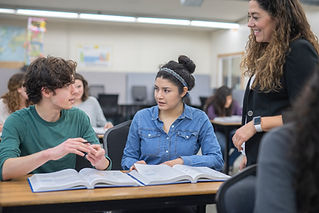
Students thrive when they feel heard and are given opportunities to explore learning in the ways that best suits them. To support my student's learning endeavors, I focus on cultivating a student-centered environment in the writing classroom that guides them as they navigate through challenging topics, adopt new approaches to intellectual frameworks, and learn to compose in their own voices. In applying Maria Montessori's consideration of education, "[Students] live not merely because [they] have life; [they] must have an environment in which to express [their] work" (239). By providing students a structured space to explore their ideas while supporting their peers through the same exploration, I help my students become more connected to themselves and those around them. Having taught both in-person and online courses, I understand the vital need for student-to-student connection. Through weekly in-class small-group assignments, my students actively apply material concepts of the course through collaborative writing projects. As they share the physical space of the classroom body-to-body—or bridge the digital divide online—they find the opportunity to develop a mind-to-mind discourse that they can take with them to future courses and their professions.
Emphasizing
Process Over Product

In the age of Artificial Intelligence, I find it more and more imperative that I help my students become aware of how they interact with AI. Through readings of carefully selected (and emerging) AI scholarship paired with practices of prompt engineering, I design AI-scaffolded assignments that require my students to think both critically and ethically about AI capabilities. By examining AI/ User engagement as a form of human-to-machine discourse, I ask students to assess their prompts and then analyze AI's response in such a way as to encourage them to see how they can guide AI towards producing the most closely desired response. Likewise, they become critically aware of how AI both influences and directs their thinking, forcing them to acknowledge how AI affects the process of thinking and writing. Through this series of AI-centered engagement activities, I aid students in recognizing the process we go through as thinkers and writers, helping them to both acknowledge and accept that composition is a process that involves many steps to reach a product, even if that product never becomes a "final" product.
Fostering
Multimodal Literacies
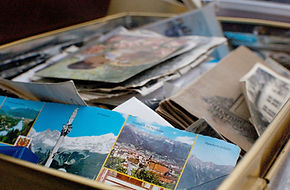
Alongside the rapid rise of generative technologies, contemporary students interact with a wider variety of media than any previous generation. Preparing them to navigate and harness these platforms requires educators to both embrace new technologies and maintain technical fluency across diverse digital landscapes. In my classroom, fostering multimodal literacy means teaching students how different rhetorical modes—textual, visual, spatial, and auditory—interact within a single composition to shape audience reception. Crucially, I expand this concept beyond the screen: I guide students to analyze how tangible artifacts, such as archived documents and historical materiality, function multimodally to impact our understanding of the world. By actively integrating multimodal text production into my writing courses—from digital archives to audio essays—I help students become adaptable, critical communicators who can intentionally select the best available means to convey their ideas.
Engaging with Archival Pedagogies

As a rhetoric and composition educator, I guide students to master the "art of persuasion" as a transformative tool for sharing knowledge. To ground these rhetorical concepts, I actively integrate archival frameworks that center on curation, organizational practices, the preservation of historical materiality, and the performed labor of the researcher, collector, or archivist. To bring this research to life, I regularly invite guest archivists to speak to my classes, introducing students to rare collections and inspiring them to discover new primary sources worthy of investigation. I empower students to curate and interrogate archival topics that align with their own intellectual passions, knowing that genuine interest makes the labor of research and writing a far more fulfilling experience. Ultimately, archival methodologies provide a powerful lens for students to connect research and writing. By bridging historical recovery with modern composition, this final pillar reinforces my commitment to cultivating a student-centered environment, honoring writing as an iterative process, and fostering rich, multimodal literacies.